Why They Matter — And How to Choose the Right One for Reliable, Compliant Manufacturing
In pharmaceutical manufacturing, the smallest components often have the biggest impact on product quality — and dust cap seals are one of the most overlooked.
Across the industry, these seals are referred to by many names:
silicone caps, silicone lids, drum caps, dust-tight covers, port seals, and more.
Regardless of terminology, their purpose remains the same: protecting your product, your process, and your people.
What Are Dust Cap Seals?
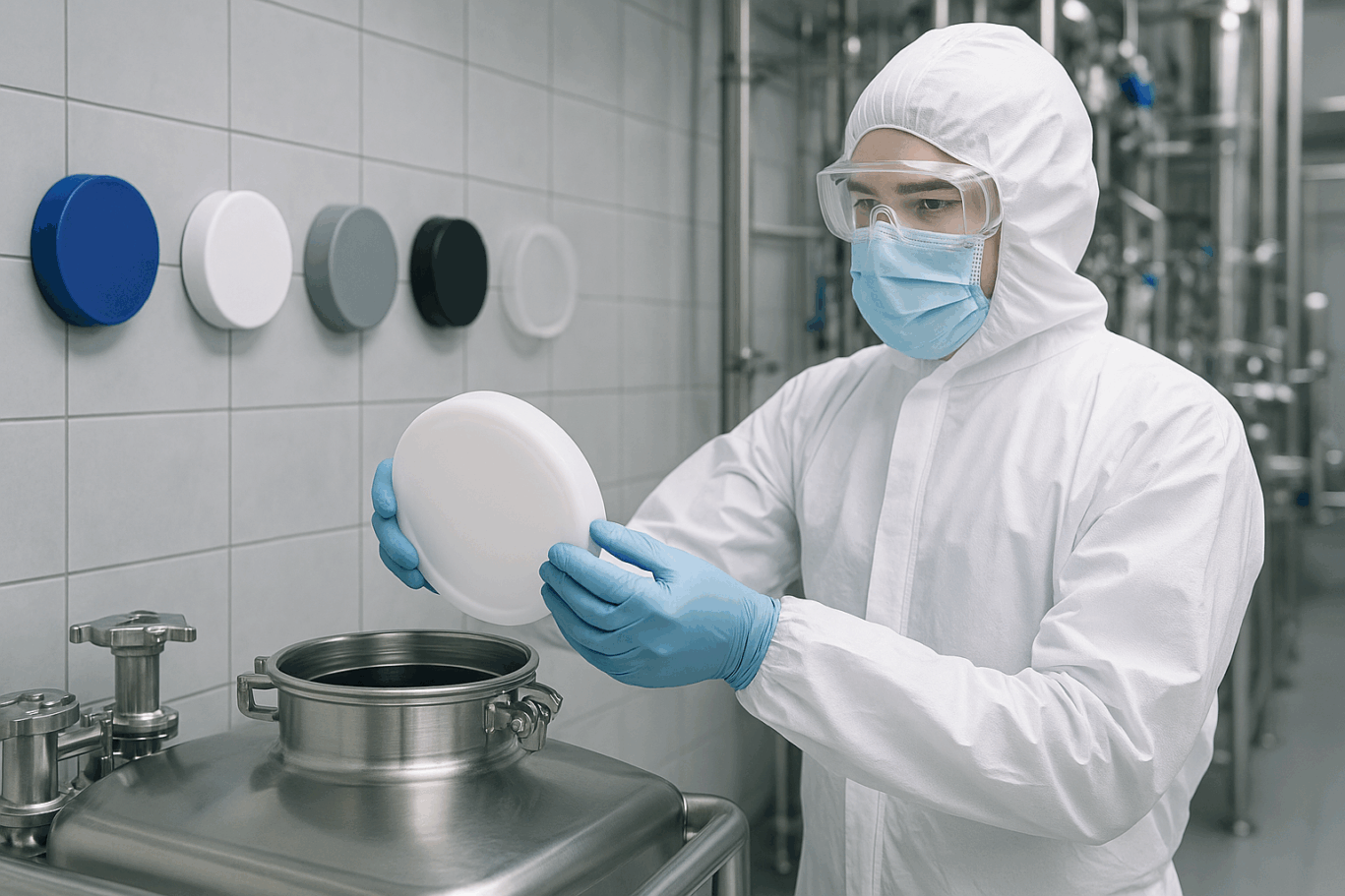
Dust cap seals are flexible, high-performance covers designed to create a dust-tight barrier over the openings of drums, IBCs, hoppers, transfer points and processing vessels.
In GMP powder-handling environments, they play a critical role in:
– Preventing product exposure
– Containing airborne particles
– Ensuring powders remain uncontaminated
– Allowing hygienic, repeatable operations
Manufactured from specialist materials such as silicone, EPDM, FKM Viton, and conductive compounds, dust cap seals must withstand repeated use, aggressive cleaning regimes, and the regulatory demands of pharmaceutical production.
What Do They Actually Do?
Although simple in appearance, dust cap seals perform several essential functions:
Maintain a Dust-Tight Process
A correctly fitted seal prevents powders from escaping during:
– Cleaning
– This protects operators, equipment, and the surrounding environment.
– Transfer
– Mixing
– Storage
– Weighing
Prevent Foreign-Body Contamination
Seals prevent foreign particles — fibres, dust, debris — from entering containers or process interfaces.
For GMP facilities, this is a key part of contamination control and audit readiness.
Support Compliance and Safety
Depending on the application, dust cap seals may need to provide:
- Full material traceability to support QA documentation
Metal detectability for contamination checks
Electrostatic discharge (ESD) safety for ATEX-rated zones
Chemical resistance for harsh cleaning or solvent exposure
Protect Product Quality
A dust-tight environment ensures consistent, predictable powder behaviour — reducing blend variability, safeguarding homogeneity, and avoiding costly rework or batch rejection.
Why Dust Cap Seals Are So Important
Although low-cost compared with major equipment, dust cap seals have high consequences when they fail.
Poor-quality, worn, or incorrect seals can lead to:
⚠ Cross-contamination
⚠ Dust escape and operator exposure
⚠ Failed audits
⚠ ATEX compliance issues
⚠ Lost product integrity
⚠ Increased cleaning requirements
⚠ Preventable downtime
With global regulators increasing scrutiny around containment and housekeeping, manufacturers are prioritising seal performance as part of their contamination-control strategy.
The result? A growing shift from basic silicone caps to high-performance, pharma-grade engineered seals.
How Terriva Supports Pharmaceutical Manufacturers With World-Leading Dust Cap Seals
Terriva’s Connection Systems division provides one of the industry’s most comprehensive ranges of pharmaceutical-grade dust cap seals, designed specifically for GMP powder handling.
Our expanded range now includes:
Metal Detectable Dust Cap Seals
Easily identified by XRF metal detection systems and magnetic separators to prevent foreign-body contamination.
Electrically Conductive Dust Cap Seals
Designed for ATEX-rated environments where static control is essential.
FKM Viton Dust Cap Seals
High chemical resistance for solvent-rich or aggressive cleaning regimes.
EPDM Dust Cap Seals
Excellent flexibility and durability for general pharmaceutical applications.
Custom Solutions
Manufactured to suit drums, IBCs, charge ports, valves and bespoke interfaces across production lines.
All seals are engineered to meet global GMP expectations, with:
✔ FDA-compliant materials
✔ Full batch traceability
✔ Repeatable, reliable performance
✔ Over 40 years of engineering heritage behind every product
Whether you operate in pharmaceuticals, nutraceuticals, or other high-compliance environments, Terriva’s dust cap seals ensure safe, contamination-free, audit-ready powder handling every time.
Ready to Improve Dust Containment at Your Facility?
If you’d like specifications, samples, or pricing for our dust cap seals — including Metal Detectable, Conductive, FKM Viton, and EPDM options — get in touch.
Frequently Asked Questions
Click a question to view the answer.
What are dust cap seals and why are they used in pharmaceutical manufacturing?
Dust cap seals are flexible, high-performance covers that create a dust-tight barrier over openings on drums, IBCs, hoppers, charge ports, and processing vessels. In GMP powder-handling environments, they help prevent product exposure, contain airborne particles, protect against contamination, and support repeatable, hygienic operations.
How do dust cap seals support GMP compliance, contamination control, and audit readiness?
A correctly fitted seal helps maintain a closed, dust-tight interface—reducing dust escape, operator exposure, and foreign-body ingress. For GMP facilities, this supports contamination control and can strengthen audit readiness when combined with material traceability, validated cleaning practices, and reliable sealing performance across repeated use cycles.
What problems can incorrect or worn dust cap seals cause?
Poor-quality or worn seals can lead to cross-contamination, dust release and operator exposure, increased cleaning burden, preventable downtime, and potential compliance issues in controlled environments. In hazardous powder applications, incorrect seals can also create static control and ATEX-related risks depending on site classification and handling conditions.
Which dust cap seal materials are best for pharmaceuticals (silicone, EPDM, FKM Viton, conductive options)?
Material choice depends on process risk and cleaning chemistry. Silicone and EPDM are common for general GMP
applications where flexibility and durability are needed. FKM Viton is typically selected for higher chemical resis
More articles like thisATEX Articles

ATEX Regulations & Dry Powder Blending