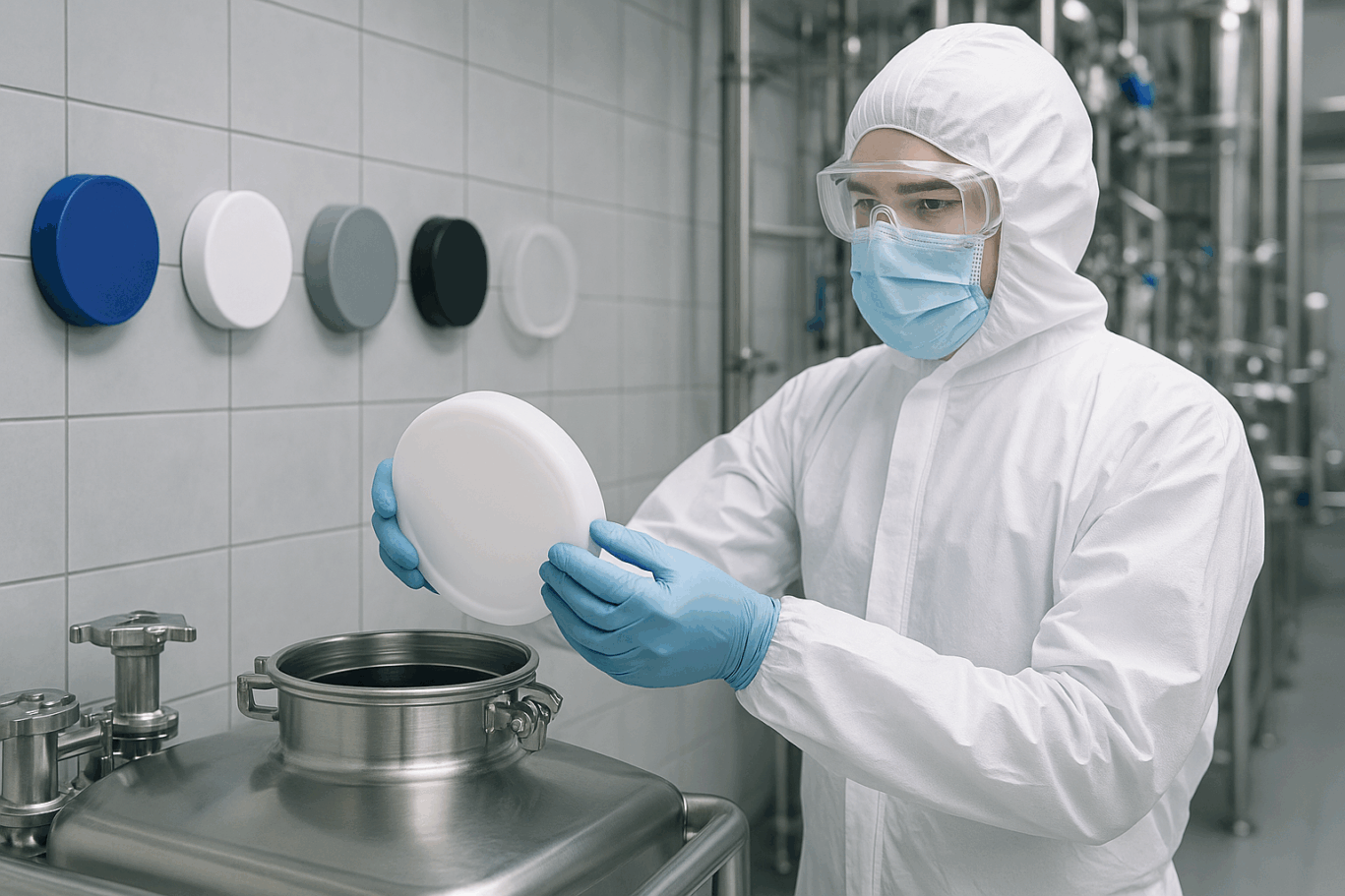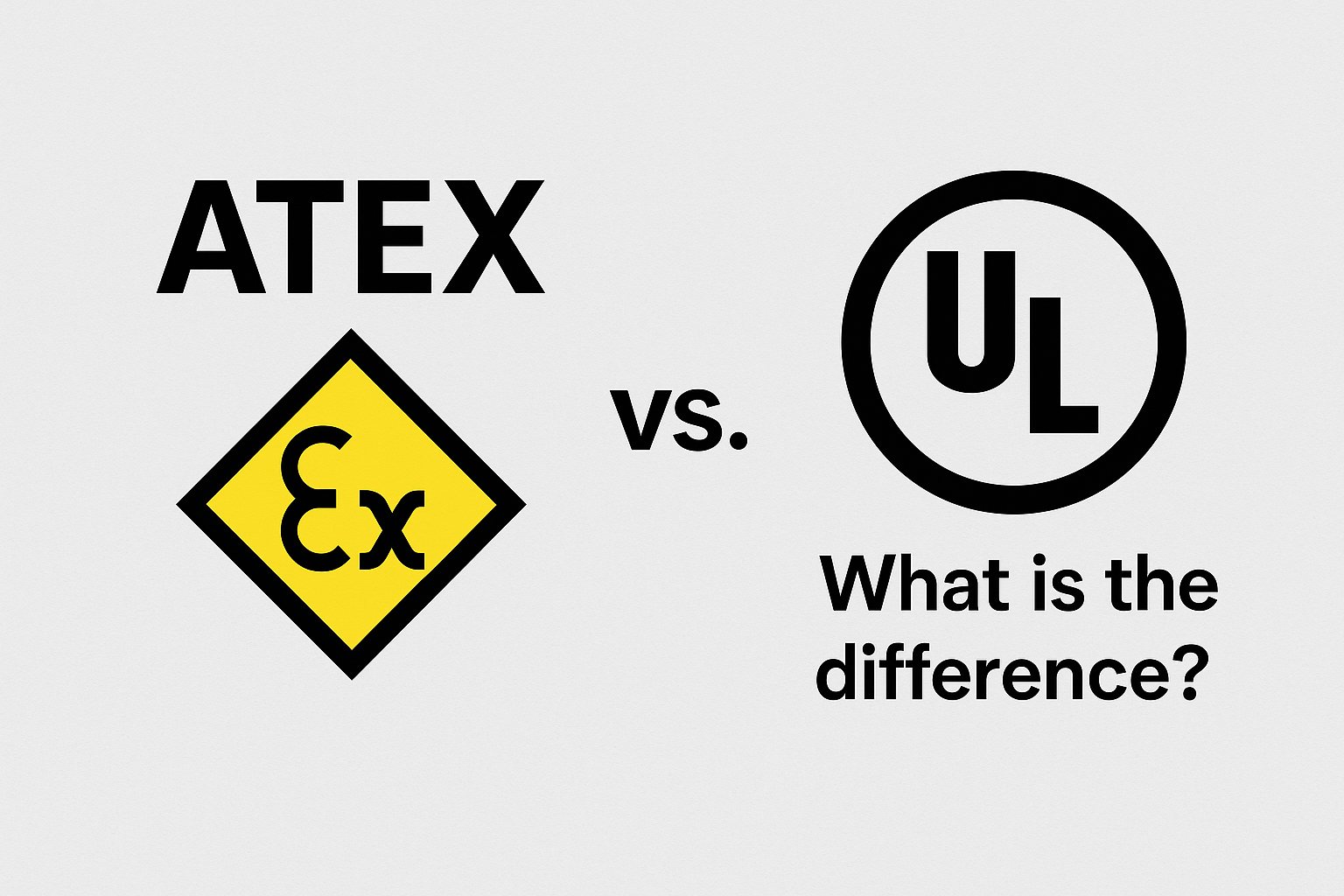
In powder manufacturing — whether pharma, nutraceuticals, food, or specialty chemicals — dust is one of the greatest hidden hazards. Managing that risk demands explosion-proof equipment and a clear understanding of compliance.
But when your supply chain spans Europe (ATEX) and North America (UL/NRTL), confusion can creep in. Many assume these standards are interchangeable. They’re not.
Understanding the differences ensures you specify correctly, avoid audit challenges, and operate safely across global sites.
💡 “ATEX is about design compliance; UL is about testing and listing.”
Why These Standards Exist — and Why They Matter
Explosions involving combustible dust or vapours are catastrophic. Standards like ATEX and UL/NRTL exist to ensure manufacturers address potential ignition sources:
- Hot surfaces
- Sparks
- Static discharge
- Electrical faults
In practice, both systems demand robust design, rigorous testing, and traceable documentation.
Area Classifications — Zones vs Class/Division
RegionTerminologyHazard MappingExample LabelEU / ATEXZones (0/1/2 gas, 20/21/22 dust)Based on frequency/duration of exposureII 2D Ex tb IIIC T85°C DbUSA / UL/NECClass I / II / III + Division 1 / 2 + GroupsDefines type (dust/gas) and likelihoodClass II, Div 1, Groups EFG
In Europe, Zone 20 indicates continuous dust exposure; in the US, this often corresponds to Class II, Division 1, depending on the dust type.
How Certification Works
🧩 ATEX Compliance
- Uses harmonised standards under the ATEX Directive.
- Lower-risk (non-electrical) products may be self-declared; higher-risk require Notified Body assessment.
- Requires a Technical File, Declaration of Conformity, and CE/Ex marking.
🔬 UL / NRTL Listing
- Requires independent testing and certification by an NRTL (e.g. UL, CSA, ETL).
- Built/tested to UL or IEC standards (UL 1203, UL/CSA 60079).
- Involves ongoing factory audits to maintain certification.
⚠️ A UL mark without reference to a hazardous-location standard (e.g. UL 1203) does not mean it’s explosion-proof.
Temperature Marking & Dust vs Gas Misunderstandings
- Gas/vapour: Uses T-codes (T1–T6) for max temperature.
- Dust: Marked with a specific °C value (e.g. T120°C).
Where Confusion Creeps In
- “Any UL mark means hazardous-location approved.” ❌ Not true — it must reference UL/IEC hazardous-location standards.
- “Class II = dust = safe.” ❌ Division 1 is far stricter than Division 2.
- “T-codes apply to dust too.” ❌ They don’t — dust is always marked with a °C surface temperature limit.
Real-World Equipment Considerations
When evaluating blenders or containment systems, ask:
- Are interior and exterior zones correctly defined?
- Has the supplier calculated safe surface temperature for your specific powder?
- Have dust-gas mixtures been considered for ignition risk?
- Are both ATEX and UL certifications available (for global operations)?
- Is documentation (ATEX Technical File / UL Listing Report) audit-ready?
At Terriva, we provide “delta compliance” — one design, dual certification — making your project simpler, safer, and compliant across regions.
Quick Reference: RFQ Checklist
✅ Area classification (Zone 20/21/22 or Class II, Div 1/2 + Group E/F/G) ✅ Dust ignition data (cloud/layer ignition temp, resistivity, particle size) ✅ Required max surface temperature (°C) ✅ Certification path (ATEX + Notified Body or UL/CSA Listing) ✅ Post-purchase inspection & maintenance plan.
Navigating ATEX vs UL isn’t just about ticking compliance boxes — it’s about achieving cross-border confidence in safety and performance.
Equip yourself with the right technical understanding, ask the right questions, and partner with a manufacturer who truly understands both frameworks.
⚙️ About Terriva
Terriva designs and manufactures premium powder-processing equipment that meets GMP, ATEX, and 21 CFR Part 11 standards — trusted in 50+ countries worldwide.
We help manufacturers achieve cleaner, safer, and more consistent powder processing through world-leading blending and dust-free handling solutions.
Frequently Asked Questions
Click a question to view the answer.
What is the difference between ATEX and UL/NRTL certification for explosible dust environments?
ATEX is a European framework focused on compliance to the ATEX Directive using harmonised standards, supported by documentation such as a Technical File and Declaration of Conformity. UL/NRTL certification (commonly used in North America) is based on independent testing and listing by a Nationally Recognized Testing Laboratory (e.g., UL, CSA, ETL), often including ongoing factory audits to maintain certification. They are not interchangeable, so global sites should specify requirements clearly at RFQ stage.
How do ATEX Zones compare with U.S. Class/Division hazardous area classifications?
ATEX uses Zones (e.g., Zone 20/21/22 for dust) based on the frequency and duration of hazardous atmosphere presence. The U.S. system uses Class/Division (e.g., Class II, Division 1 or 2 for combustible dust) and dust Groups (often E/F/G) to define hazard type and likelihood. While equivalencies are often discussed, classification depends on the dust and process, so mapping should be verified via a competent hazard assessment.
Does a UL mark mean equipment is explosion-proof or hazardous-location approved?
Not necessarily. A UL mark only indicates the product has been evaluated to specific standards. For hazardous locations, the marking should reference relevant hazardous-location standards (for example, standards aligned with explosive atmospheres requirements). A general UL mark without hazardous-location context does not automatically mean the equipment is suitable for combustible dust or vapour environments.
How are temperature markings different for dust versus gas/vapour hazardous areas?
For gas/vapour atmospheres, equipment commonly uses T-codes (e.g., T1–T6) to define maximum surface temperature. For combustible dust, equipment is typically marked with a specific maximum surface temperature in °C. Confusion occurs when T-codes are incorrectly applied to dust; dust applications require a temperature limit in °C based on ignition risk and dust layer considerations.
What should be included in an RFQ to specify ATEX or UL/NRTL compliant powder processing equipment?
A strong RFQ should define the area classification (Zone 20/21/22 or Class II, Div 1/2 + Group), key dust ignition data (e.g., cloud/layer ignition temperatures, resistivity, particle size), required maximum surface temperature, the intended certification path (ATEX with appropriate assessment or UL/CSA/ETL listing), and documentation expectations (e.g., ATEX Technical File or UL Listing Report). Including inspection/maintenance expectations also improves long-term compliance.