Selecting the correct powder blending solution is a critical decision for pharmaceutical manufacturers. The choice between IBC (Intermediate Bulk Container) blenders and drum blenders directly affects blend quality, validation effort, operator safety, and long-term process flexibility.
Maintaining consistent powder blend uniformity in pharmaceutical manufacturing is often one of the primary drivers behind blender selection—particularly during scale-up from lab to production.
Why the IBC vs Drum Blender Decision Matters in Pharma
Unlike food or chemical processing, pharmaceutical manufacturing operates under strict GMP, ATEX, and validation expectations. Equipment decisions must therefore account for:
- Risk of cross-contamination
- Operator exposure and dust generation
- Cleaning and changeover time
- Scale-up consistency
- Documentation and validation support
Many of these risks increase when powder handling is poorly controlled, particularly in hazardous environments ATEX-compliant powder blending explained.
What Is an IBC Blender?
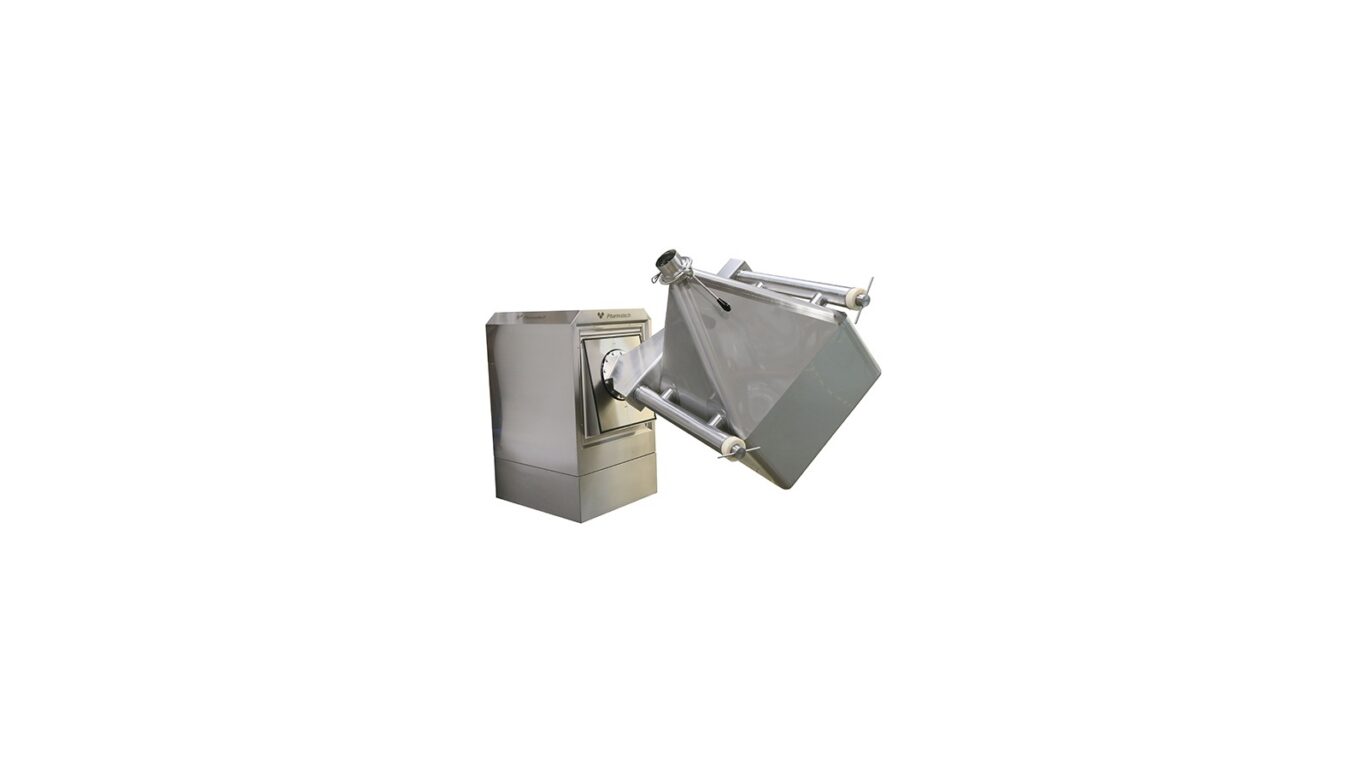
An IBC blender uses a removable container that acts as both the blending vessel and product transport unit. The container is rotated or tumbled by the blender drive system.
Advantages of IBC Blenders in Pharmaceutical Manufacturing
- Excellent containment and reduced operator exposure
- Faster changeover between products
- Simplified cleaning validation
- Lower cross-contamination risk
- Well suited to multi-product facilities
Closed IBC systems are frequently integrated with dust-free powder transfer solutions for pharmaceutical manufacturing to further reduce dust release during charging and discharge.
Limitations of IBC Blenders
- Higher capital investment due to multiple containers
- Additional material handling requirements
- Reduced efficiency at very low fill levels
- Container logistics must be well managed
What Is a Drum Blender?
A drum blender uses a removable cylindrical drum that is loaded onto a rotating blender frame. Product is charged into the drum, blended by rotation, and discharged either via gravity or controlled interfaces.
Crucially, the drum itself is not fixed to the machine and can be removed, replaced, or dedicated per product or campaign — offering flexibility that is often misunderstood.
Drum blenders are widely used in pharmaceutical manufacturing where batch sizes are consistent, formulations are well characterised, and robust, repeatable blending is required.
Advantages of Drum Blenders in Pharmaceutical Manufacturing
- Simple, robust mechanical design – Fewer moving parts result in high reliability and low maintenance requirements.
- Removable, interchangeable drums – Drums can be dedicated to specific products or campaigns, reducing cross-contamination risk when managed correctly.
- Lower initial capital cost – Drum blenders typically require less upfront investment than full IBC-based systems.
- Excellent blend uniformity when correctly sized – Particularly effective for free-flowing powders and stable formulations.
- Well suited to dedicated or long production campaigns – Ideal where frequent product changeovers are not required.
Considerations When Using Drum Blenders
- Cleaning responsibility sits with the drum – While the blender frame remains clean, the drum must still be washed, dried, and verified between products unless dedicated.
- Changeover time depends on drum strategy – Faster when using dedicated drums; slower if a single drum is shared across multiple products.
- Containment is application-dependent – Operator exposure can be higher if open charging or discharging is used, but this can be mitigated with contained transfer interfaces and appropriate SOPs.
- Less flexibility than IBC systems for highly dynamic facilities – Particularly where frequent formulation changes or many SKUs are processed.
These limitations can increase the risk of batch variability where powder segregation during blending in pharma is not adequately controlled.
IBC vs Drum Blenders: A Practical Comparison
| Consideration | IBC Blender | Drum Blender |
| Containment | Excellent | Moderate (can be enhanced with interfaces) |
| Cleaning & changeover | Fast | Moderate (drum-dependent) |
| Cross-contamination risk | Very low | Low-moderate (strategy dependent) |
| Capital cost | Higher | Lower |
| Multi-product flexibility | High | Moderate |
| Operator exposure | Minimal | Higher if not contained |
For many manufacturers, blender selection forms part of wider pharmaceutical powder blender selection criteria that must balance compliance, productivity, and future growth.
Typical Pharmaceutical Use Cases
IBC Blenders Are Often Preferred When:
- Multiple formulations are processed on the same line
- Potent or dust-sensitive materials are handled
- Containment and operator safety are priorities
- Fast changeover is required
Drum Blenders Are Often Preferred When:
- Producing a single product or long campaigns
- Batch sizes are stable and well understood
- Capital expenditure is constrained
- Cleaning regimes are established and repeatable
Key Questions to Ask Before Selecting a Blender
- How many products will run on this equipment annually?
- What are the powder characteristics (density, flow, segregation risk)?
- What ATEX zone applies to the process?
- How critical is fast changeover?
- How will the process scale in the future?
Answering these questions early helps reduce re-engineering and validation risk later in the project lifecycle.
Final Thoughts
There is no universally “better” option between IBC and drum blenders. The right solution depends on process risk, regulatory expectations, and long-term operational strategy.
If you are still defining specifications, reviewing how pharmaceutical manufacturers validate powder blending processes can help avoid costly changes after approval.
Want application-specific guidance?
A short technical discussion with a powder blending specialist can help identify the lowest-risk route forward before design decisions are locked in.