
Executive Summary
Pharmaceutical manufacturing is shifting from time-based processing and end-product testing toward data-driven, real-time quality assurance.
At the centre of this transformation is Near-Infrared Process Analytical Technology (NIR PAT)—enabling manufacturers to monitor blend uniformity, API concentration, moisture content, and raw material variability during powder blending, rather than after it.
This article explores:
- What NIR PAT is and how it works in pharmaceutical powder blending
- The measurable operational and regulatory benefits
- Why adoption across the industry remains uneven
- Expert implementation insight from Sentronic
- How Terriva enables practical, scalable PAT integration
- The pathway toward real-time release manufacturing (RTRT)
What is NIR PAT?
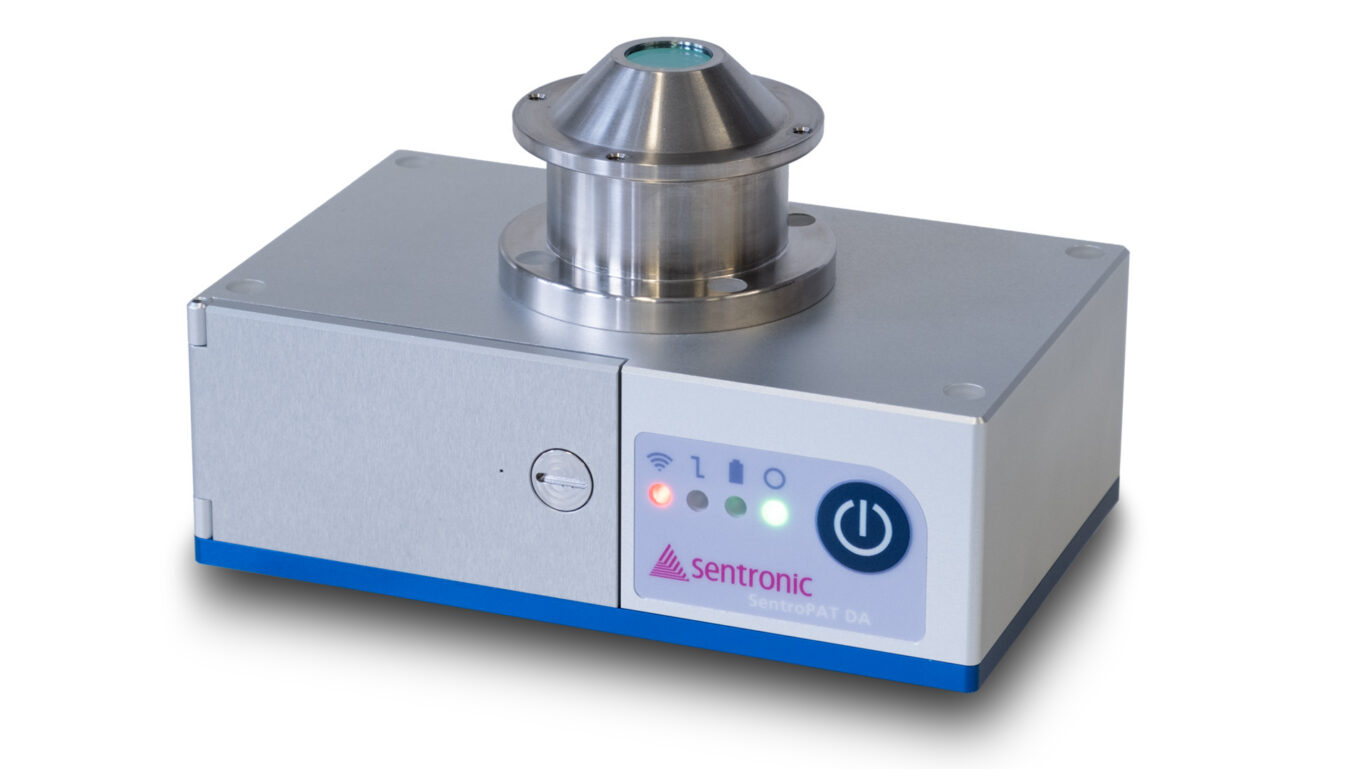
Near-Infrared Process Analytical Technology (NIR PAT) is a real-time analytical measurement approach using reflected near-infrared light to determine chemical and physical properties of materials during manufacturing.
Within pharmaceutical powder blending, NIR PAT enables continuous monitoring of:
- Blend uniformity
- Active Pharmaceutical Ingredient (API) concentration
- Moisture content
- Raw material variability
Traditional Blend Verification Limitations
Historically, blend quality confirmation relied on:
- Fixed mixing times
- Manual thief sampling
- Off-line laboratory testing
These introduce delay, sampling variability, and uncertainty.
NIR PAT replaces assumption with direct process visibility, aligning with:
- Quality by Design (QbD)
- Continued Process Verification (CPV)
- Real-Time Release Testing (RTRT)
The result is a shift from retrospective quality control to proactive quality assurance.
Benefits of NIR PAT in Pharmaceutical Powder Blending
Real-Time Blend Uniformity Assurance
Manufacturers can determine the true mixing endpoint, eliminating conservative time-based blending and reducing the risk of under‑ or over‑mixing.
Reduced Laboratory Dependency
Continuous in‑process measurement reduces manual sampling, analytical workload, and sampling error risk.
Faster Batch Release
Real-time data enables parametric or real-time release strategies, improving throughput and shortening production timelines.
Confident Process Understanding & Seamless Site Transfer
NIR PAT transforms blending into a scientifically understood, data‑driven process, enabling:
- Stronger control strategies
- Faster site‑to‑site transfer
- Reduced validation timelines
- More reliable global scale‑up
Stronger Regulatory Alignment
PAT adoption directly supports FDA and EMA expectations for scientific process understanding, lifecycle verification, and robust control strategies.
Reduced Waste & Deviation Risk
Earlier detection of blend issues protects:
- Product quality
- Batch yield
- Commercial timelines
Why Is Industry Adoption Still Uneven?
Despite two decades of regulatory encouragement, PAT adoption in powder blending varies widely.
Common Barriers
- Perceived implementation complexity
- Chemometric calibration uncertainty
- Integration with legacy batch equipment
- Limited cross‑disciplinary PAT knowledge
What Successful Implementation Requires
Effective deployment depends on holistic process design, including:
- Blender geometry and scale
- Powder flow and segregation behaviour
- Probe positioning and optical access
- Representative calibration datasets
Bridging the gap requires collaboration between equipment suppliers, PAT specialists, and pharmaceutical manufacturers.
Expert Perspective: Sentronic
Real-world PAT deployment insight is essential.
Definition of NIR PAT by Owen Rehrauer
“Collection of NIR spectral measurements during a manufacturing process, which are then processed to derive process or product information. This information is used to monitor or control a manufacturing process, with the goal of improving product quality or enhancing process efficiency.”
Why manufacturers are adopting NIR PAT?
Owen of Sentronic EXPLAINS:
“There is very often a strong business case for NIR PAT in bin blending, as thief sampling is time and labour intensive as well as prone to sampling error. Additionally, PAT provides key process insights during process development and transfer of a process from site-to-site, leading to enhanced product development and process controls. Lastly, there are many cases where NIR PAT may be used to reduce end-point release testing, leading to a reduction in required inventory.”
Observed Manufacturing Results
Successful implementations commonly deliver:
- Reduced blend times
- Fewer out‑of‑specification investigations
- Lower analytical workload
- Improved batch consistency
- Clearer progression toward real‑time release
Manufacturers shift from asking: “How long should we blend?”
To: “What is the process telling us right now?”
How Terriva Enables Practical NIR PAT Adoption
Terriva delivers more than equipment — we provide validated, integration-ready powder-processing solutions that enable real-time process understanding, consistent product quality, and scalable pharmaceutical manufacturing.
Through engineered blending systems, data-ready control architectures, and global technical expertise, Terriva helps manufacturers implement NIR PAT in a way that is practical, compliant, and aligned with long-term operational performance.
PAT‑Ready Blender Integration
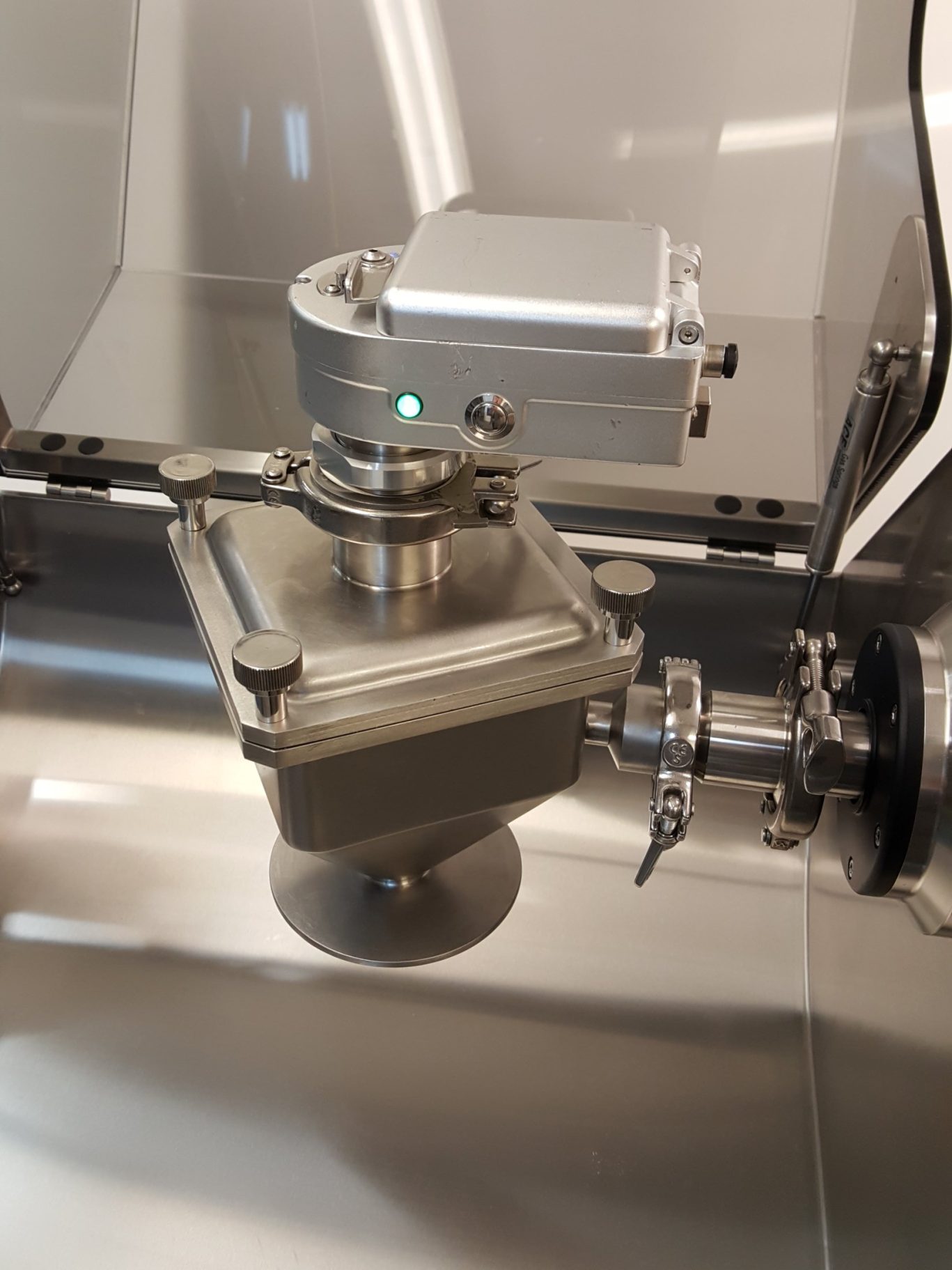
Pharmatech powder blenders can be configured for secure, cleanable NIR probe installation, ensuring reliable measurement and GMP compliance.
Process Diagnosis Before Technology Selection
Implementation begins with evaluation of:
- Powder characteristics
- Batch size and throughput
- Containment and ATEX requirements
- Regulatory expectations
Ensuring PAT delivers true operational value.
Collaboration with Specialist Partners
Terriva bridges: Mechanical design → Process science → Regulatory confidence
Supporting Real‑Time Release Manufacturing
The goal is measurable advancement toward:
- Shorter development cycles
- Higher process capability
- Reduced quality risk
- Future‑ready manufacturing
The Future: Closed‑Loop, Data‑Driven Powder Blending
As PAT maturity increases, pharmaceutical manufacturing is moving toward:
- Real-time blend endpoint determination
- Adaptive mixing control
- Integrated digital batch records
- Predictive quality assurance
In this model, testing no longer confirms quality—the process ensures it.
NIR PAT is a foundational step toward autonomous pharmaceutical manufacturing.
Conclusion
NIR PAT is no longer emerging—it is becoming an expected capability in modern pharmaceutical powder blending.
Manufacturers adopting NIR PAT achieve:
- Greater certainty in blend quality
- Faster, safer batch release
- Reduced operational waste
- Stronger regulatory alignment
- Deeper scientific process understanding
The transition from time‑based blending to data‑verified manufacturing is already underway.
Terriva supports your journey—from feasibility to full‑scale PAT‑enabled production.
FAQ: NIR PAT in Pharmaceutical Powder Blending
What does NIR PAT measure during blending?
Blend uniformity, API concentration, moisture content, and raw‑material variability in real time.
Does NIR PAT enable real‑time release testing?
Yes—when integrated within a validated control strategy aligned to QbD and RTRT frameworks.
Can PAT be integrated into existing blenders?
What does NIR PAT measure during blending?
Blend uniformity, API concentration, moisture content, and raw‑material variability in real time.
Does NIR PAT enable real‑time release testing?
Yes—when integrated within a validated control strategy aligned to QbD and RTRT frameworks.
Can PAT be integrated into existing blenders?
What does NIR PAT measure during blending?
Blend uniformity, API concentration, moisture content, and raw‑material variability in real time.
Does NIR PAT enable real‑time release testing?
Yes—when integrated within a validated control strategy aligned to QbD and RTRT frameworks.
Can PAT be integrated into existing blenders?
In many cases, yes—provided probe positioning, calibration models, and GMP compliance are correctly engineered.