How to Strengthen Homogeneity, URS Development, and Compliance for Explosible Powders
U.S. pharmaceutical manufacturers are under more pressure than ever to deliver consistent product quality, minimise deviation risks, and meet increasingly demanding expectations from the FDA, auditors, and commercial stakeholders.
Whether you are formulating tablets, capsules, nutraceutical blends, intermediates, or R&D-scale batches, challenges often appear in three areas:
–Achieving repeatable blend homogeneity
–Creating a robust URS that truly defines what you need
–Safely handling explosible powders while meeting compliance expectations
At Terriva, these are the most common points raised by U.S. operations, quality, and engineering teams. Below, we break down what typically goes wrong—and how to build a stronger, more compliant, and more scalable blending process.
Homogeneity Challenges in U.S. Pharmaceutical Facilities
Why blends fail—and how to fix them
Inconsistent homogeneity is a major contributor to batch failure, rework, and regulatory exposure. The underlying causes are often predictable.
Common Root Causes
-Sensitive powders with diverse particle sizes/bulk densities
-Segregation during loading or discharge
-Incorrect fill ratios
-Poor IBC design (dead zones, insufficient flow)
-Inadequate blender RPM or blending profile
What U.S. manufacturers can do
1. Validate the optimum fill level, usually between 50–70% depending on material.
2. Use geometrically accurate blending containers, designed to reduce dead spots.
3. Introduce repeatable, documented blending profiles supported by 21 CFR Part 11.
4. Consider intensifier bars and internal baffles for difficult formulations.
5. Benchmark blend endpoint detection with sampling or NIR technologies.
Where Terriva supports:
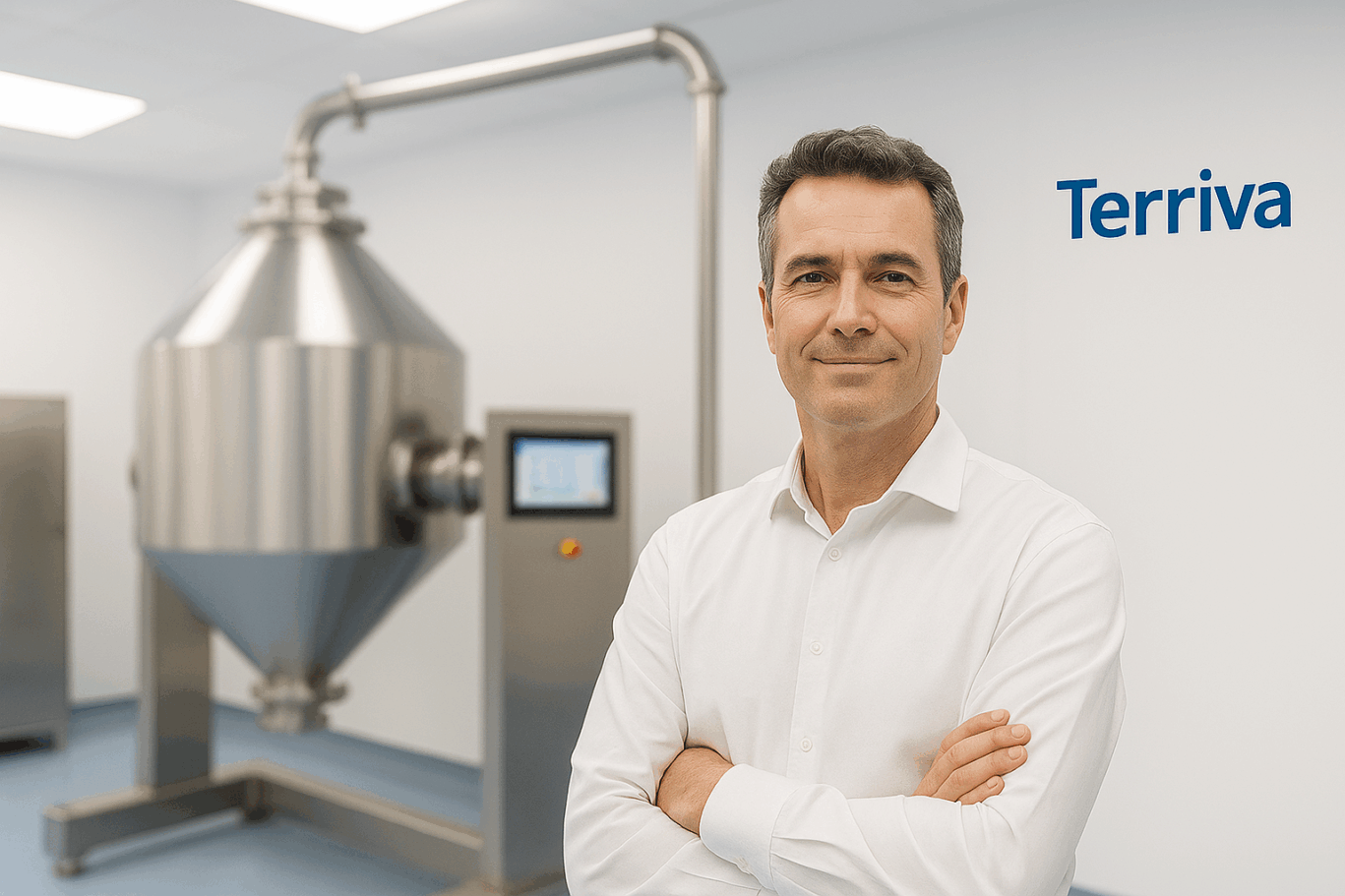
Our Pharmatech blenders are designed around achieving predictable homogeneity, and many U.S. customers pair these with NIR validation or staged test blending before specifying a full-scale system.
Creating a URS That Sets Your Project up for Success
Avoid generic or incomplete specifications that cause delays
A User Requirement Specification (URS) is one of the most influential documents in any pharmaceutical equipment project. Yet, many U.S. manufacturers struggle with:
- – Missing compliance and safety parameter
– Overly generic URS templates - – Requirements copied from unrelated equipment
- – Lack of clarity about future expansion or scale-up
A high-quality blending URS should include:
– Batch sizes and powder characteristics (bulk density, cohesiveness, API potency) - – Homogeneity expectations and test methodology
- – Cleaning method & validation approach
- – 21 CFR Part 11 data expectations
- – ATEX/Div 1–2 environment classification (if applicable)
- – Room layout, operator access, and workflow
- – Material transfer method and containment expectations
Why this matters:
A precise URS is how you ensure the blender is engineered for your process—not for someone else’s.
How Terriva helps:
We routinely review draft URS documents for U.S. customers and hold free pre-URS consultations to ensure requirements are clear, realistic, and fully aligned with your compliance needs.
Handling Explosible Powders: Meeting U.S. Compliance Expectations
Understanding ATEX, NFPA, and hazardous-area classifications
Handling explosible powders in the U.S. requires strict alignment with NFPA and NEC guidelines. This area is often misunderstood, particularly when powders behave differently during blending, transfer, or discharge.
Typical concerns raised by U.S. manufacturers:
“Does my powder actually require explosion-protected equipment?”
“Do I need ATEX equipment even though I’m in the U.S.?”
“What documentation do auditors expect during a dust hazard analysis?”
“How do I avoid electrostatic discharge during blending and IBC transfer?”
Key points to understand:
– The U.S. relies on NFPA, OSHA, and NEC (Div 1/2) requirements.
– Many companies also source ATEX-certified systems because they provide a globally recognised safety standard for explosible powders.
– A Dust Hazard Analysis (DHA) is mandatory under NFPA 652.
– Equipment surfaces, seals, IBC design, and grounding systems play a critical role in mitigating ignition risks.
Where Terriva supports:
Terriva specialises in supplying equipment that is suitable for ATEX environments, and explosion-protected blending systems, dust-free connection solutions, and handling equipment that comply with U.S. NFPA/OSHA expectations.
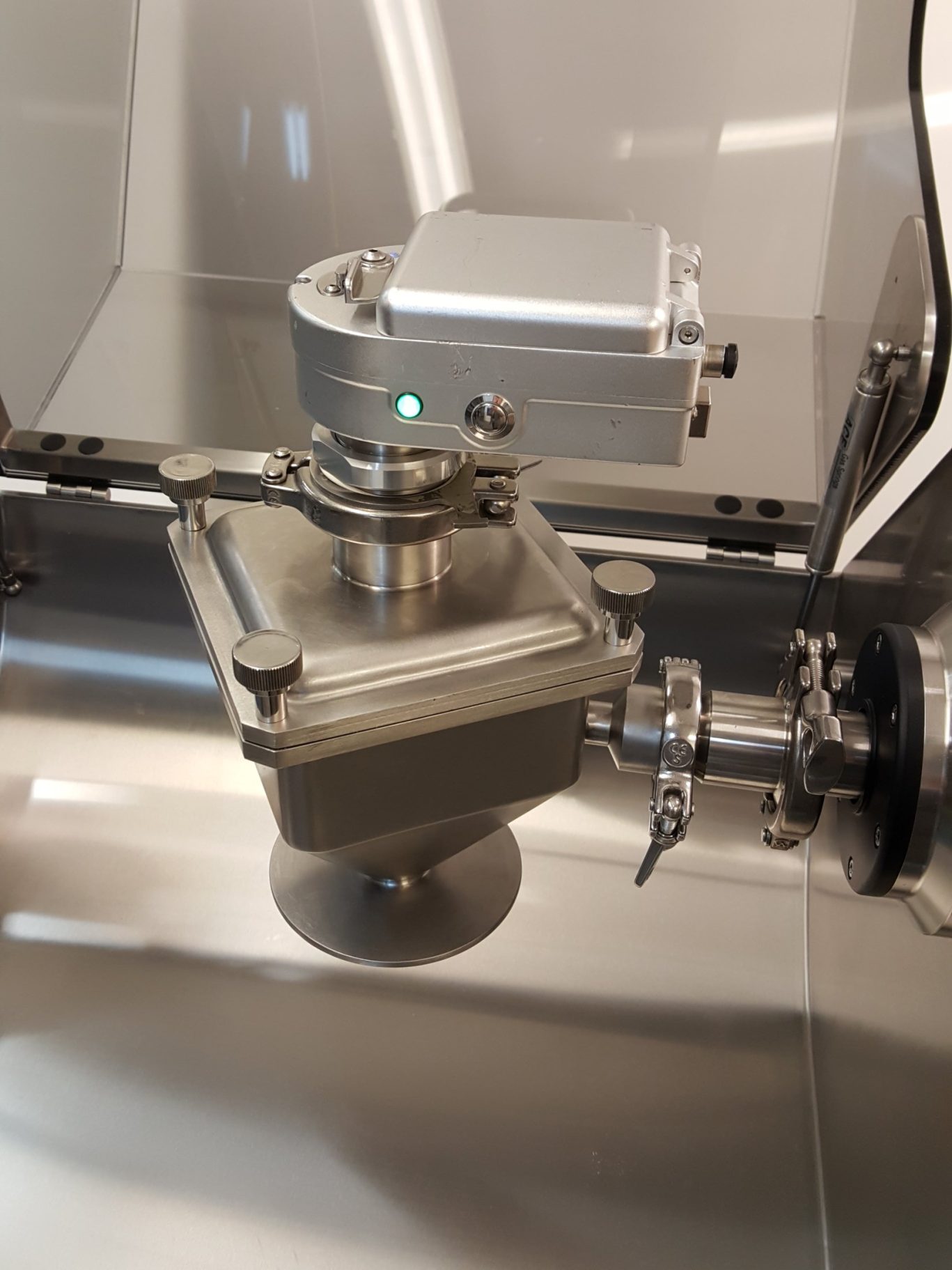
Our Connection Systems range (Dust Cap Seals, Flexiducts, FlexiSieves, etc.) is commonly used to contain dust, eliminate spills, and reduce explosion risk during transfers.
What U.S. Manufacturers Gain by Strengthening These Three Areas
– Reduced batch failures caused by segregation or variability
– Shorter validation timelines with clearer URS documentation
– Greater compliance confidence during FDA, NFPA, and internal audits
– Enhanced operator safety and dust control
– A blending process that is scalable and future-proof
How Terriva Supports U.S. Pharmaceutical Manufacturers
Terriva (with our Pharmatech powder blenders and Connection Systems dust-free transfer equipment) supports manufacturers across the United States with:
– Consultation-led project scoping
– URS review and guidance
– ATEX and NFPA compliant systems
– Precision-engineered blenders from 5L to 1,200
– Dust-free transfer solutions that eliminate contamination
– Full FAT, SAT, and validation support
We have more than 40 years of global experience helping teams improve powder homogeneity, achieve compliance, and build reliable blending processes that perform for decades.
If you’re a U.S. pharmaceutical manufacturer experiencing challenges with homogeneity, compliance, or equipment specification, our engineering team is here to help.
Book a free technical consultation with Terriva
We’ll review your process, challenges, and URS—or help you build one from scratch.
Frequently Asked Questions
Click a question to view the answer.
Why do pharmaceutical powder blends fail homogeneity in U.S. manufacturing sites?
Homogeneity failures are usually driven by predictable process and material factors rather than the formulation “mysteriously changing.” Common causes include particle size and density variation, segregation during loading or discharge, incorrect fill ratios, container or IBC designs that create dead zones, and inadequate or inconsistent RPM/blending profiles. In many cases, the blend is uniform in the blender but loses integrity during discharge or transfer.
What practical steps improve blend homogeneity and reduce batch failures?
Manufacturers can often improve repeatability by validating the optimal fill level (commonly 50–70% depending on material and geometry), using geometrically appropriate blending containers that minimise stagnant zones, implementing repeatable, documented blending profiles (including speed, ramp/acceleration, and cycle time), and considering intensifier bars or internal baffles for difficult formulations. Blend end-point confidence can be strengthened with sampling plans and/or PAT tools such as NIR.
What should a robust powder blender URS include for GMP and 21 CFR Part 11 compliance?
A high-quality URS should clearly define your process needs and compliance expectations, including: batch sizes and powder characteristics (bulk density, cohesion, potency), homogeneity targets and test method, cleaning approach and validation strategy, 21 CFR Part 11 data and audit trail requirements, hazardous-area classification where applicable (e.g., NEC Class/Division), room layout/workflow, and transfer/containment expectations. A precise URS reduces rework, delays, and validation risk.
Do U.S. manufacturers need ATEX equipment, and how does this relate to NFPA and NEC requirements?
In the U.S., explosible powder handling is typically governed by NFPA/OSHA guidance and NEC hazardous-area classifications (e.g., Division 1/2), rather than ATEX as a legal requirement. However, many U.S. manufacturers specify ATEX-certified systems because ATEX is a widely recognised global safety standard and can support harmonised multi-site expectations. The right approach depends on your dust hazard assessment, ignition risks, and site standards.
What documentation and engineering controls help meet compliance expectations for explosible powders?
For explosible powders, compliance confidence typically depends on completing a Dust Hazard Analysis (DHA) (mandatory under NFPA 652) and implementing engineering controls such as appropriate grounding/bonding, conductive interfaces where needed, suitable seals and IBC design, and dust containment during charging and discharge. Contained, dust-free transfer interfaces can reduce spills, operator exposure, and ignition risk while supporting audit-ready documentation.