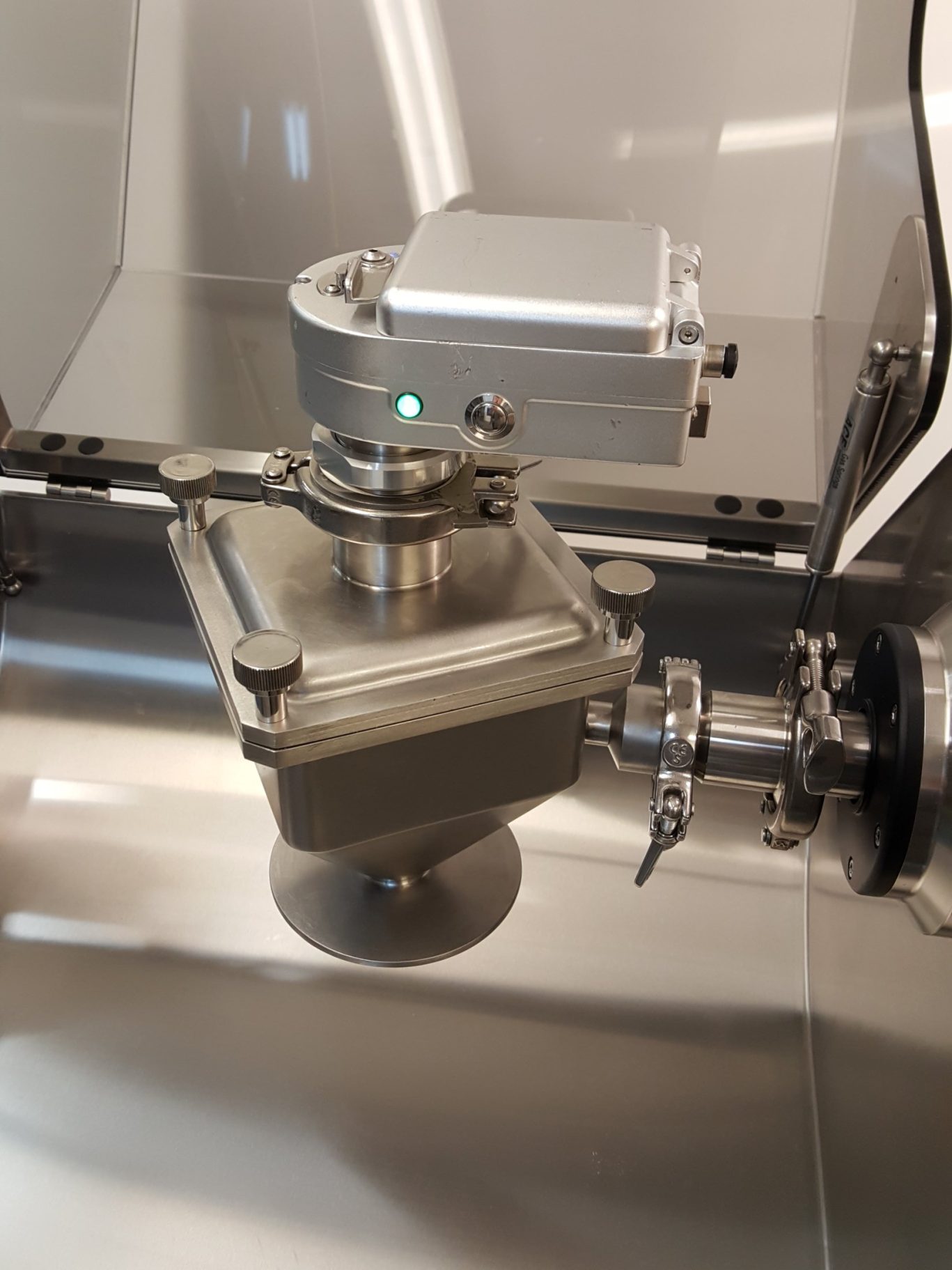
What is pharmaceutical blender sizing?
Pharmaceutical blender sizing is the process of selecting blender volume, geometry, and operating fill level to ensure consistent blend uniformity, regulatory compliance, and scalable batch production across development and commercial manufacturing.
Why blender sizing matters more than most teams expect
Pharmaceutical blender sizing is a critical process in ensuring blend uniformity, GMP compliance, and scalable batch manufacturing.
Selecting the correct blender size is not simply a mechanical decision.
It directly influences:
- Blend uniformity
- Batch reproducibility
- Cleaning validation effort
- Changeover time
- Regulatory confidence during inspection
Regulatory confidence during inspection:
- Segregation risk
- Inconsistent homogeneity
- Extended mixing times
- Scale-up failures between development and commercial manufacturing
In regulated pharmaceutical environments, these are not efficiency issues — they are quality risks.
The most common mistake in blender slection
Many projects begin with a simple question:
“What is the batch size?”
While important, batch weight alone is not sufficient to size a blender correctly.
Correct sizing must consider:
- Bulk density variation
- Fill volume percentage
- Powder flow behaviour
- Blend uniformity targets
- Future scale-up strategy
Without these factors, the chosen blender may operate outside its optimal mixing window.
The practical checklist for sizing the correct blender
Define the true batch volume — not just batch weight
Powders are specified in kilograms, but blenders operate in volume.
You must determine:
- Minimum bulk density
- Maximum bulk density
- Resulting occupied volume range
This ensures the blender can operate within the recommended fill level (typically 40–70% depending on geometry).
Key risk:
If fill level is too low → poor particle interaction.
If too high → restricted movement and incomplete mixing.
Confirm the optimal fill percentage for the blender geometry
Different blender types behave differently:
- IBC bin blenders → flexible fill range, excellent containment
- V-shell blenders → sensitive to overfilling
- Double-cone blenders → strong diffusion mixing at correct volume
Sizing must match:
- Powder characteristics
- Required blend uniformity
- Containment strategy
Not all blender types are interchangeable.
Evaluate powder characteristics early
Blend performance is driven more by powder science than equipment size.
Critical properties include:
- Particle size distribution
- Density differences between actives and excipients
- Cohesion and flowability
- Segregation tendency
- Electrostatic behaviour
Ignoring these leads to:
- Longer development time
- Failed scale-up (check out FDA – Process Validation Guidance)
- CAPAs after commercial launch
Correct blender sizing should always align with material behaviour.
Align blender size with process scale-up strategy
A blender chosen only for today’s batch may block tomorrow’s growth.
Consider:
- Clinical → pilot → commercial scale transition
- Multi-product facility flexibility
- Future batch size increases
- Equipment standardisation across sites
The most effective facilities design blender strategy around:
- lifecycle manufacturing, not single-project demand.
Confirm containment, cleaning, and GMP integration
Sizing is not purely about mixing performance.
You must also validate:
- Containment level (OEB requirements)
- Cleanability and wash-in-place capability
- Changeover duration
- Integration with upstream and downstream equipment
- 21 CFR Part 11 control expectations
A correctly sized blender that fails cleaning validation or containment is still the wrong choice.
Validate mixing time at the correct working volume
Mixing trials must be performed at:
- True operating fill level
- Representative formulation
- Defined uniformity acceptance criteria
Testing at incorrect volume gives misleading validation data and creates regulatory exposure later.
A simple rule used by experienced pharmaceutical engineers
Before confirming blender size, ask:
“Will this blender still be correct in five years?
If the answer is uncertain,
the sizing decision is probably incomplete.
How Terriva approaches blender sizing
At Terriva, blender sizing is treated as a process design decision, not a catalogue selection.
Our approach integrates:
- Powder characterisation insight
- Proven pharmaceutical blending geometries
- Scalable IBC-based manufacturing strategy
- GMP, ATEX, and containment compliance
- Long-term lifecycle thinking
The result is not just a blender that mixes —
but a system that supports regulatory confidence and future growth.
Need support with pharmaceutical blender sizing?
Our engineering team supports pharmaceutical manufacturers globally with:
- Blender sizing studies
- Powder characterisation insight
- GMP-compliant IBC blending systems
- Scale-up from clinical to commercial production
Speak to a Terriva blending specialist → Contact Us
Frequently Asked Questions
Why is blender sizing critical for pharmaceutical batch quality?
Blender sizing directly affects blend uniformity, batch reproducibility, segregation risk, and regulatory confidence. An incorrectly sized blender may still mix powder, but it can create inconsistent homogeneity, extended mixing times, and scale-up failures between development and commercial manufacturing. In GMP environments, these are quality and compliance risks, not just efficiency concerns.
Is batch weight alone enough to select the correct blender size?
No. Batch weight must be converted into occupied volume using minimum and maximum bulk density. Correct sizing also depends on fill percentage, powder flow behaviour, blend uniformity targets, and future scale-up strategy. Ignoring these factors can cause the blender to operate outside its optimal mixing window, increasing the risk of poor blend performance.
What fill level should a pharmaceutical blender operate at?
Most pharmaceutical blenders perform best between 40% and 70% of total working volume, depending on blender geometry and powder behaviour.
- Too low → insufficient particle interaction and poor mixing
- Too high → restricted movement and incomplete blending
Validating performance at the true operating fill level is essential for reliable GMP data.
How do powder characteristics influence blender sizing?
Powder behaviour often has greater impact than equipment size. Critical factors include:
- Particle size distribution
- Density differences between actives and excipients
- Cohesion, flowability, and electrostatics
- Segregation tendency
If these are not considered early, projects may face longer development timelines, failed scale-up, or CAPAs after commercial launch.
Should blender sizing consider future commercial manufacturing?
Yes. Selecting a blender only for current development batches can limit clinical-to-commercial scale-up, multi-product flexibility, and future capacity growth. A lifecycle approach ensures the blender remains suitable for GMP production, containment, cleaning validation, and long-term operational strategy.