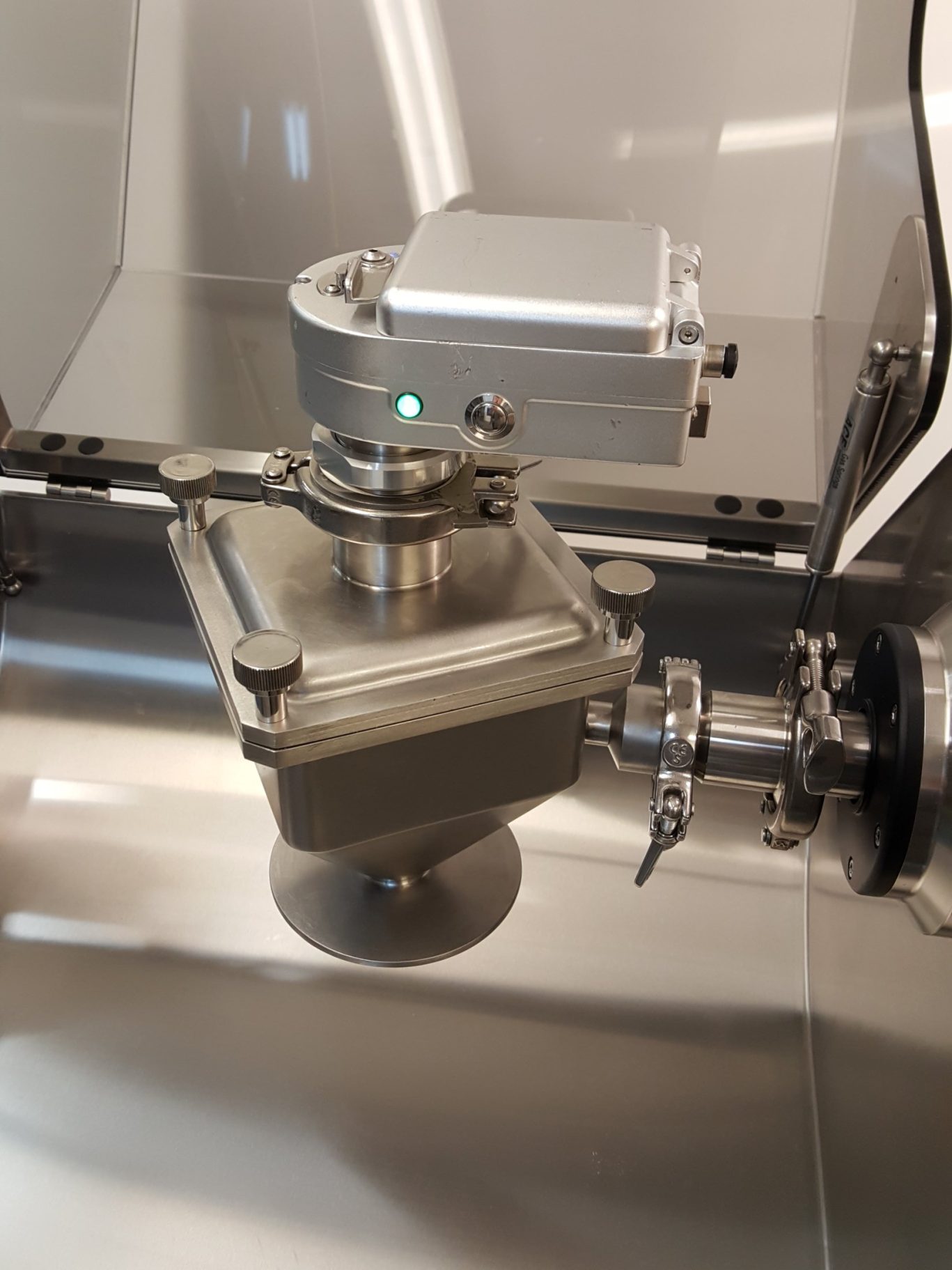
In pharmaceutical manufacturing, “dead spots” (also called stagnant zones) are areas inside a powder blender where material doesn’t move, doesn’t exchange, or moves far less than the rest of the blend. They’re one of the fastest routes to blend non-uniformity, out-of-spec content uniformity, segregation issues, and painful investigations during validation or audit.
Below are the most common causes of dead spots, how to recognise them, and what to do about them.
What is a “dead spot” in powder blending?
A dead spot is any region where powder experiences low shear, low turnover, and limited particle exchange relative to the “active” mixing volume. In practice, it often means:
- A pocket of powder remains in place for too long
- Minor ingredients don’t disperse properly into (or out of) that zone
- Sampling results become inconsistent depending on where you sample
In GMP environments, dead spots are not just a performance issue — they’re a process risk.
What causes dead spots inside powder blenders?
Incorrect fill level for the blender’s working volume
One of the most common causes is simply running a blender too full or too empty.
- Overfilled: powder can “lock up,” reducing circulation paths and turnover
- Underfilled: powder may slide or roll without enough mass interaction to drive exchange
In both cases, you can end up with zones that are effectively isolated.
Blender geometry and internals that don’t promote turnover
Dead spots are often driven by how the blender moves material, especially at:
- Corners, radii, or shallow zones where powder can “park”
- Interfaces around baffles, intensifier bars, or mounting features
- Areas shielded by internal structures (or poorly positioned internal components)
A blender can look “mixed” from the outside while still creating low-exchange pockets internally.
Powder properties that encourage bridging, caking, or cohesive flow
Pharma powders aren’t all free-flowing. Dead spots become more likely when powders are:
- Cohesive (fine particles, high surface area)
- Moisture-sensitive (micro-caking, clumping)
- Electrostatic (powder “sticks” to surfaces and resists turnover)
- Broad PSD / density mismatch (certain fractions migrate and settle)
If the material naturally forms agglomerates, “inactive” zones can develop even in a good blender.
Inappropriate mixing speed, time, or energy input
Dead spots can be created by running a process that doesn’t match the material:
- Too low energy → insufficient turnover and exchange
- Too high speed → can drive segregation, compaction, or “layering” effects in some blends
- Wrong mixing time → some blends need staged addition, pre-blend steps, or controlled time/energy profiles
“More mixing” doesn’t always fix dead spots — sometimes it makes uniformity worse.
Poor loading sequence and minor-ingredient addition method
If low-dose APIs or excipients are added in a way that promotes localised concentration, you can create pockets that take far too long to disperse.
Common triggers include:
- Adding minor ingredients in one heap rather than distributed dosing
- Inadequate pre-blending
- Inconsistent bag tipping position or loading practices
This is especially critical for low-dose formulations and potent compounds.
Build-up on internal surfaces
Dead spots can be “created” over time by:
- Product build-up on surfaces (especially in humid or sticky formulations)
- Residue around seals, gaskets, or internal features
- Surface finish changes (wear, scratching, coating changes)
A zone that was active during FAT/SAT can become stagnant later without obvious external signs.
Discharge design and end-of-batch behaviour
Some dead spots only reveal themselves during:
- Final discharge (material remains trapped in certain zones)
- Partial discharge / split batching
- Rework cycles
If powder consistently remains behind, it’s a sign of geometry/flow-path issues — and it can become a contamination or cross-batch risk depending on cleaning strategy.
How to tell if you have dead spots
Look for patterns like:
- High RSD or inconsistent CU results, especially location-dependent
- “Good” samples from some points, “bad” from others
- Repeat failures after scale-up or formulation changes
- Powder residue remaining in the same internal areas after discharge
- Blend uniformity improving then drifting with time (a sign of segregation or layered flow)
If you only sample from “easy” points, dead spots can stay hidden until validation or audit sampling becomes more stringent.
Practical ways to reduce or eliminate dead spots
Confirm you’re operating in the blender’s true working range (not just nominal capacity)
Review loading sequence and dosing method for minor ingredients
Assess powder behaviour: cohesion, moisture, electrostatics, PSD, density
Optimise speed/time based on material response, not habit
Consider blender features that improve exchange and turnover (geometry, internals, controlled intensification where appropriate)
Validate with a robust sampling plan that includes high-risk zones, not only convenient points
Why this matters in GMP and audit environments
Dead spots increase the risk of:
- Blend uniformity failures
- Batch rejection or rework
- CAPAs and extended investigations
- Poor process robustness during scale-up
- Cleaning and cross-contamination concerns (if residual hold-up occurs)
In other words: dead spots can become both a quality risk and a business risk.
How Terriva supports pharmaceutical manufacturers globally
Terriva supports pharmaceutical manufacturers with a practical, engineering-led approach: helping teams understand whether a problem is driven by equipment behaviour, powder behaviour, or process settings — and then resolving it with changes that stand up to validation and audit scrutiny.
With Terriva’s global reach, we support customers and partners across multiple regions and regulatory environments, helping standardise blending and powder-handling practices for consistent results site-to-site.
If you’re seeing inconsistent blend uniformity and suspect stagnant zones, we can help you diagnose the root cause and identify the most reliable path to a robust, audit-ready blending process.
Frequently Asked Questions
Click a question to view the answer.
What is a “dead spot” or stagnant zone in a pharmaceutical powder blender?
A dead spot (stagnant zone) is an area inside a blender where powder experiences low turnover, low shear, and limited particle exchange compared with the active mixing volume. In practice, this can mean powder remains in place too long, minor ingredients fail to disperse properly, and sampling results become location-dependent. In GMP environments, dead spots are a process risk because they can drive blend non-uniformity and content uniformity failures.
What causes dead spots inside powder blenders?
Dead spots are usually caused by a combination of factors, including operating outside the blender’s effective fill volume range (too full or too empty), blender geometry and internals that don’t promote turnover, powder properties that encourage cohesion, caking, bridging, or electrostatic adhesion, inappropriate speed/time/energy input, poor loading sequence (especially for low-dose additions), and build-up on internal surfaces that creates hold-up areas over time.
How do dead spots affect blend uniformity and content uniformity in GMP production?
Dead spots create pockets of powder that do not exchange with the rest of the blend, which can leave localised high or low API concentrations. This often appears as high RSD, inconsistent content uniformity, “good” samples from some locations and “bad” from others, and intermittent out-of-spec results that trigger deviations, investigations, and CAPAs. If material is trapped after discharge, dead spots can also increase cross-batch contamination risk depending on the cleaning strategy.
How can manufacturers identify dead spots during blending investigations or validation?
Dead spots are often indicated by location-dependent sampling results (failures tied to where samples are taken), repeat problems after scale-up or formulation change, and powder consistently remaining in the same internal areas after discharge. A robust approach includes using a sampling plan that targets high-risk zones (not only convenient points) and reviewing patterns such as uniformity improving then drifting over time, which can signal stagnant or layered flow.
What practical steps reduce or eliminate dead spots in pharmaceutical powder blending?
Practical steps include confirming operation within the blender’s true working range, optimising fill level, refining loading sequence and minor-ingredient dosing (including pre-blends or distributed addition), assessing powder behaviour (cohesion, moisture, electrostatics, PSD, density), optimising speed and time based on material response, reviewing blender geometry/internals to improve exchange, and validating the outcome with a representative sampling strategy that includes high-risk zones and end-of-batch behaviour.