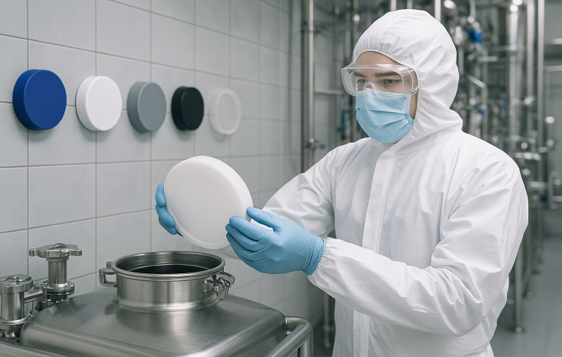
In pharmaceutical manufacturing, powder handling is where process integrity is most exposed.
Blending may be validated. Equipment may be designed to GMP standards. Controls may be compliant.
But if the connection between systems is not properly engineered, everything upstream is put at risk.
This is where Dust Cap Seals (DCS) play a critical role.
The Overlooked Risk in Powder Handling
Across pharmaceutical and CDMO environments, we consistently see the same challenge:
The process is robust — but the interfaces between systems are not.
Typical transfer points include:
- Blender discharge into downstream equipment
- IBC or drum docking
- Feeding into mills or granulators
- Intermediate transfers between process steps
At each of these points, there is a moment where:
- Product can escape
- Contamination can enter
- Operators can be exposed
For manufacturers handling potent compounds, multi-product campaigns, or regulated batches, this is not a minor issue — it is a critical control point.
What Is a Dust Cap Seal?
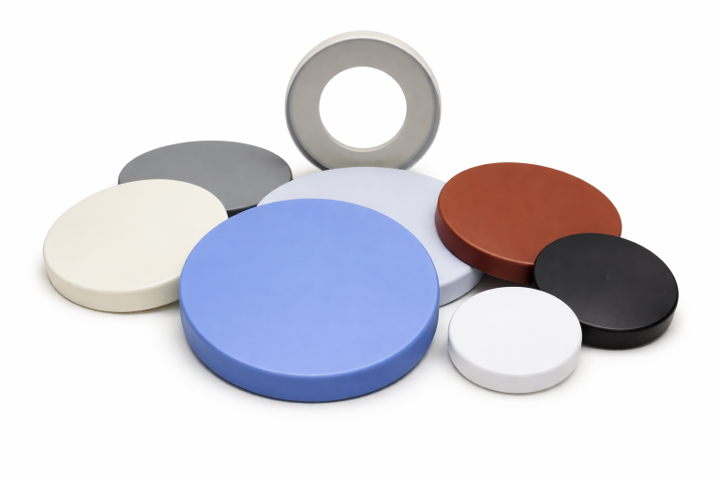
A Dust Cap Seal is a purpose-designed containment interface that creates a dust-tight connection between two process points.
Rather than relying on basic covers or improvised connections, a Dust Cap Seal provides:
- A repeatable, engineered seal
- A controlled interface between equipment
- A reliable barrier to dust and contamination
Typically, the system consists of a high-performance elastomer seal retained within a stainless steel mounting ring, forming a tight seal when two process components are brought together.
It is a simple concept — but one that directly underpins containment, compliance, and consistency.
Why Dust Cap Seals Are Essential in Pharmaceutical Environments
Protecting Operators and Product
Pharmaceutical pipelines are evolving.
We are seeing a continued shift toward:
- Highly potent APIs (HPAPIs)
- Targeted therapies
- Smaller, more specialised batch sizes
In these environments, exposure risk increases — even at low volumes.
Dust Cap Seals help ensure that:
- Operators are protected from airborne particulates
- Product remains contained within the process
This is particularly important for CDMOs and multi-product facilities, where different compounds are handled across shared infrastructure.
Supporting Audit-Ready Processes
Regulatory expectations continue to rise.
Auditors are no longer focused solely on core equipment — they are increasingly assessing:
- How materials move through the process
- Where risks of contamination exist
- Whether interfaces are controlled and repeatable
Poorly managed transfer points are often where issues are identified.
A correctly specified Dust Cap Seal supports:
- Consistent, repeatable connections
- Reduced variability in handling
- Improved cleanability and hygienic design
All of which contribute to a more audit-ready process.
Reducing Cleaning Burden and Cross-Contamination Risk
Even minimal dust escape can have a disproportionate impact:
- Increased cleaning requirements
- Longer changeover times
- Risk of cross-batch contamination
For facilities running multiple products or campaigns, this becomes a major operational constraint.
By creating a dust-tight seal at the point of transfer, Dust Cap Seals help:
- Minimise airborne particulates
- Reduce cleaning downtime
- Improve overall process efficiency
Performing in Real Operating Conditions
In theory, connections are perfectly aligned.
In practice, they rarely are.
Movement, vibration, and mechanical tolerances all introduce variability.
Dust Cap Seals are designed to accommodate:
- Minor misalignment
- Dynamic movement during operation
- Variations between equipment interfaces
- This ensures that containment is maintained not just in design — but in reality.
Where Dust Cap Seals Deliver the Most Value
Dust Cap Seals are most valuable at critical transfer interfaces, including:
- Blender discharge points
- IBC and drum docking stations
- Feeding systems into downstream equipment
- Contained transfer between process steps
In simple terms:
If powder is moving from one piece of equipment to another, the connection point matters
Why Leading Pharmaceutical Manufacturers Specify Terriva Connection Systems
For over 30 years, the Terriva Connection Systems range has been supporting pharmaceutical manufacturers in achieving reliable, dust-tight powder transfer.
Today, it is widely used by global pharmaceutical manufacturers and CDMOs who require:
- Consistency across sites
- Confidence in containment
- Alignment with GMP expectations
Our focus is not just on supplying components, but on ensuring that connection points do not become points of failure.
What Sets the Range Apart:
- Designed specifically for pharmaceutical environments
Supporting GMP, cleanability, and hygienic operation - Proven over 30+ years of application
Trusted in real-world pharmaceutical processes, not just theoretical design - Material and application flexibility
Including silicone, EPDM, Viton (FKM), and metal-detectable options - Scalable across different systems and sites
Supporting standardisation for global manufacturers - Engineered to perform under real conditions
Maintaining dust-tight sealing despite movement, pressure, and variation
For organisations operating at scale, this enables standardisation, validation confidence, and reduced operational risk.
A Final Perspective
In pharmaceutical manufacturing, it is often assumed that performance is defined by major equipment:
- The blender
- The mill
- The containment system
But in reality, process integrity is often determined by the smallest details.
Dust Cap Seals sit at one of the most critical points in the process:
The moment where product moves — and risk is introduced.
Getting this right is not just about containment.
It is about protecting product, people, and process integrity at every stage.
If you are reviewing your powder handling process — whether for a new installation or to improve an existing line — we are always happy to provide a technical consultation to ensure your connection systems are aligned with your containment and compliance requirements.
Frequently Asked Questions
What is a Dust Cap Seal in pharmaceutical manufacturing?
A Dust Cap Seal is a purpose-designed connection system used to create a dust-tight seal between two powder handling interfaces, such as drums, IBCs, blenders, hoppers, or discharge points. In pharmaceutical manufacturing, it helps contain powders during transfer, protecting both product quality and operator safety.
Why is a Dust Cap Seal important in pharma?
Dust Cap Seals are important because powder transfer points can be a major source of dust escape, contamination risk, and operator exposure. In pharmaceutical environments, where GMP, containment, and cleanability are critical, a properly specified Dust Cap Seal helps support safer, cleaner, and more consistent processing.
Where are Dust Cap Seals typically used?
Dust Cap Seals are commonly used at critical powder transfer points, including blender discharge connections, drum and IBC docking stations, hopper inlets, and other interfaces where powder moves between pieces of equipment. They are especially valuable wherever manufacturers need to reduce dust, maintain containment, and improve process reliability.
How do Dust Cap Seals help reduce contamination risk?
By creating a repeatable dust-tight interface, Dust Cap Seals help prevent powder from escaping into the surrounding environment and reduce the chance of external contamination entering the process. This is particularly important in multi-product pharmaceutical facilities, where poor containment at transfer points can increase cross-contamination risk and cleaning burden.
Are Dust Cap Seals suitable for potent pharmaceutical powders?
Yes. Dust Cap Seals are widely used in pharmaceutical powder handling applications, including environments where potent compounds are being processed. Their role is to support contained transfer by helping minimise airborne dust at critical connection points, making them highly relevant for manufacturers handling potent or sensitive materials.
What materials are available for Dust Cap Seals?
Dust Cap Seals are available in a range of materials to suit pharmaceutical applications, including silicone, EPDM, Viton (FKM), and metal-detectable options. Material selection depends on factors such as chemical compatibility, cleanability requirements, operating conditions, and the manufacturer’s compliance expectations.
Can Dust Cap Seals support GMP pharmaceutical manufacturing?
Yes. When correctly specified, Dust Cap Seals can support GMP pharmaceutical manufacturing by improving containment, reducing dust escape, and helping create more consistent and hygienic transfer points. They form part of a broader process design approach focused on product protection, cleanability, and audit readiness.
Why do pharmaceutical manufacturers choose Terriva Connection Systems?
Pharmaceutical manufacturers choose Terriva Connection Systems because the range has over 30 years of application in powder handling and is popular with global pharma manufacturers looking for reliable, dust-tight connections. The range is designed to help improve containment, support standardisation across sites, and reduce risk at critical powder transfer interfaces.